
Union County VINELink Coverage
Florida uses VINE and VINELink for contributed custody status and event notifications. Union County participation is directly documented. The UCSO jail page states that Union County Jail participates in V.I.N.E.S. automatic notification when an offender is released. Florida also uses VINE in the state corrections setting. That supports checks involving the county jail and Florida Department of Corrections institutions.
VINELink serves two functions. It lets a person check one contributed custody record, and it lets a registrant ask for notice of later status changes. It is not a Union County list of everyone released today. It also does not replace the sheriff’s booking and release record, the court disposition, or FDC’s state-prison release history. BOP and ICE custody remain outside the Florida VINE path.
The national VINELink entry opens the jurisdiction selection and person-search interface.
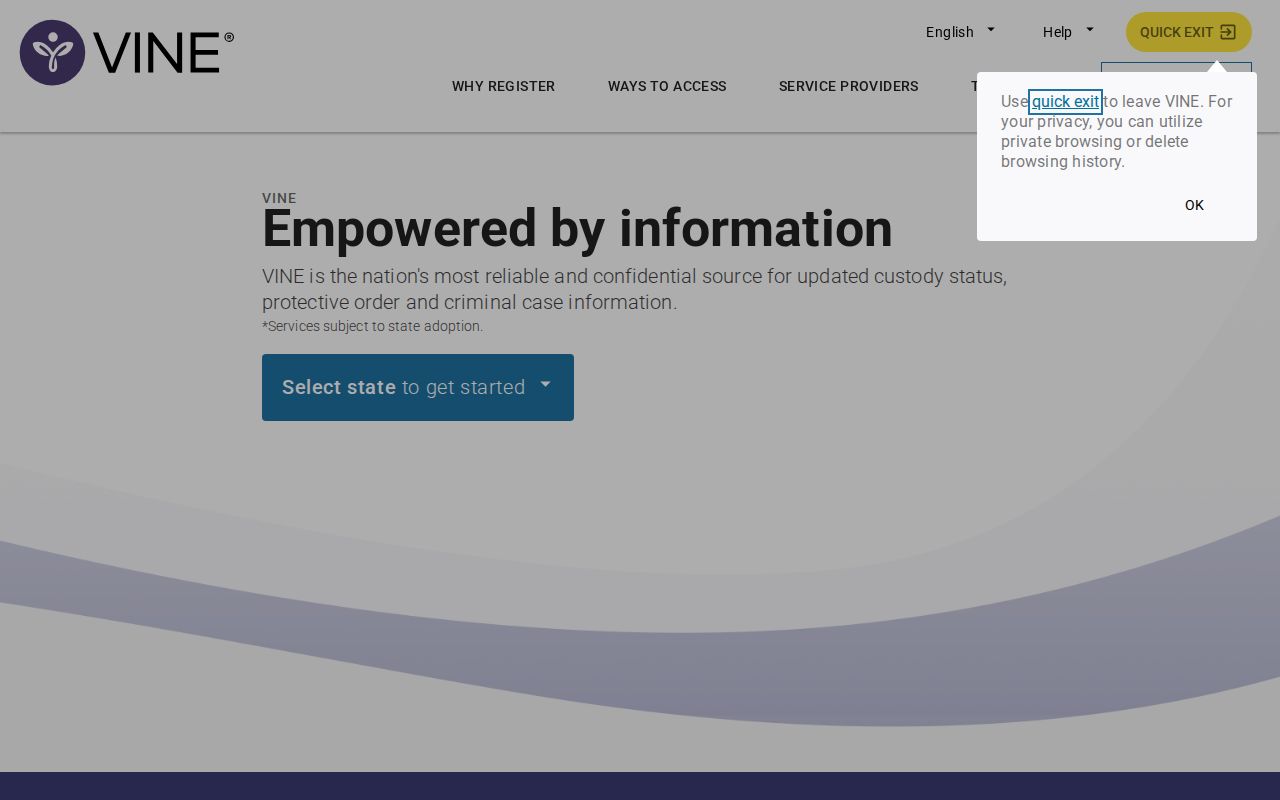
The captured screen shows why selecting Florida comes before matching a Union County record. The direct Florida entry is available at Florida VINELink.
Search Union County VINELink Records
Begin with the correct state page and a specific person. A name alone can produce similar matches. An agency identifier, date of birth, facility, and other displayed details help separate them. Preserve the agency and event information if the result may need later confirmation through UCSO, FDC, or the court.
- Open the Florida state entry from VINELink.
- Search by the person’s name or an available agency identifier.
- Compare date of birth, identifier, facility, and other shown facts before choosing a record.
- Open the matching record and read the exact agency, facility, custody status, and event information.
- If release appears, save the displayed agency and date, then confirm with UCSO or FDC as appropriate.
- If there is no match, try spelling and identifier variants, use the phone service, and contact the source agency.
No result is not proof of release. A feed may lag, a name may be entered differently, or the person may be in a system VINE does not cover. For a broader named-person search across jail, court, state, federal, and immigration sources, use the Union County released inmate lookup.
If several records appear, do not choose one from the name alone. Compare the reporting agency and facility with the last known custody. Union County Jail is a sheriff facility, while Reception and Medical Center, its West Unit and Work Camp, and Union Correctional Institution are FDC sites. A movement between those state institutions can be a transfer, not release. The agency boundary is often the fastest way to reject a wrong match.
Union County VINELink Release Fields
The exact live label for an already released Union County Jail record was not available from an official text source during the research. Do not expect a guaranteed word such as “Released” when the provider may use “Out of Custody” or another label. Read the whole record and the contributing agency. No official Union County post-release display period was found.
| Displayed item | How to read it |
|---|---|
| Jurisdiction and agency | Identifies the government source contributing the event |
| Name and identifier | Helps match the correct person and custody record |
| Facility or location | Shows the reporting custody site when supplied |
| Custody status | States the provider’s current contributed status, subject to lag |
| Event type | Distinguishes release from transfer, escape, death, or out-to-court |
| Event date | Places the reported change in time but is not a certified record |
A scheduled or projected release date, when another corrections system displays one, is not proof that release occurred. VINE is strongest as an event and alert tool. UCSO supplies the local jail release record. FDC supplies state-prison custody and release history. The Union County clerk supplies the legal order and disposition.
Note: Match the agency first because Union County contains both a county jail and several FDC state institutions.
Register Union County Release Alerts
Registration begins from the correct person’s record. Available channels can include telephone, text, email, or an in-app option. The live service controls which choices appear. A phone registration uses a four-digit PIN to acknowledge automated calls. Keep that PIN available, since calls can repeat until the system receives it.
- Open the matching offender record and choose the option equivalent to “Notify Me of Status Changes.”
- Select an available channel and enter the phone number, text destination, email address, or app destination.
- For telephone notice, create the requested four-digit PIN.
- Review the person and destination on the confirmation page, then submit the registration.
- Keep the PIN so an automated call can be acknowledged.
- Update the registration if the destination changes.
Florida’s FDC form says any four digits may be selected. If that form is used without a chosen PIN, the default is the last four digits of the telephone number. Florida material also says text and email messages do not repeat in the same manner as automated calls. The research did not establish a separate Florida email verification code or link, so none should be assumed.
The official FDC VINE PIN form documents the four-digit choice and the different phone, text, and email notification behavior.
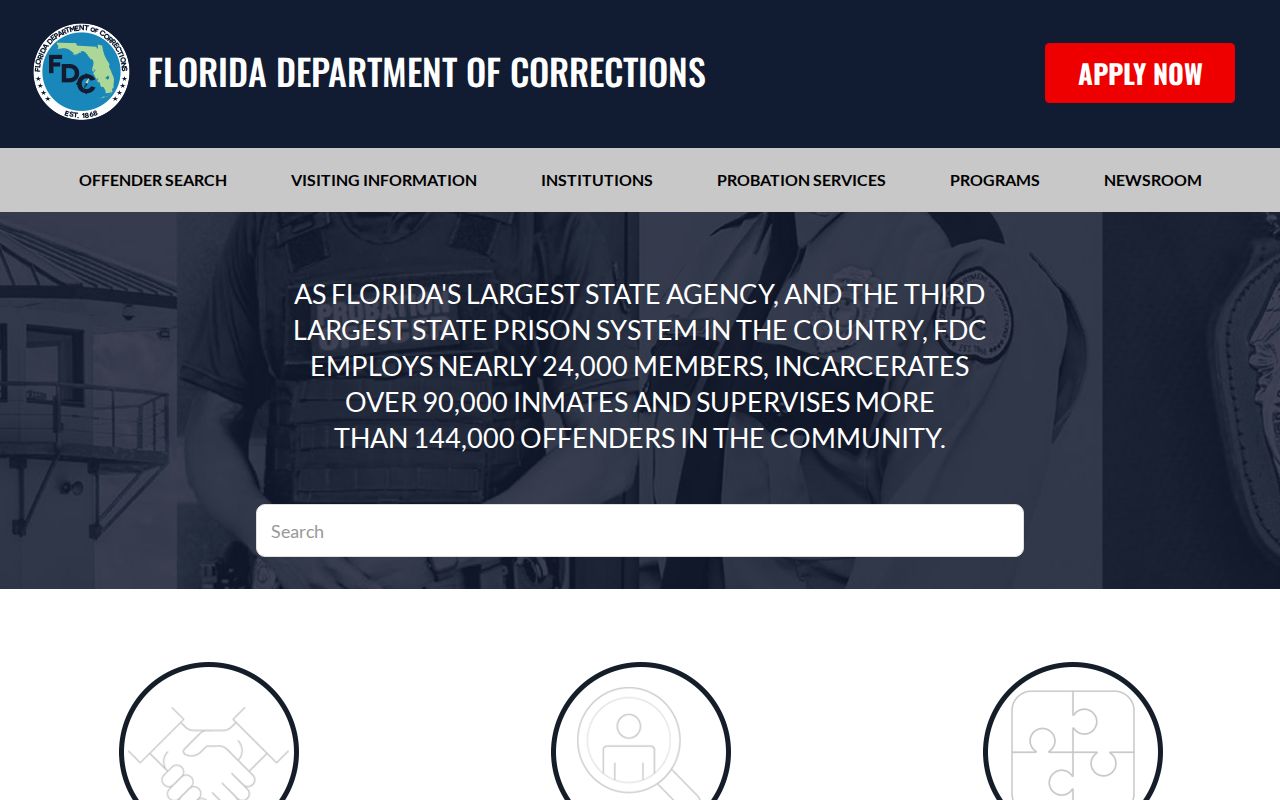
The captured form supports the PIN instructions without adding an unverified confirmation step. Keep the chosen digits private and available for automated calls.
Florida VINE Alert Events
The FDC Victim Notification Request identifies release, transfer, escape, death, and out-to-court as movement events. It also supplies the Florida VINE telephone route at 1-877-846-3435. That event range matters. A call or message must be read or heard in full rather than reduced to “the person got out.”
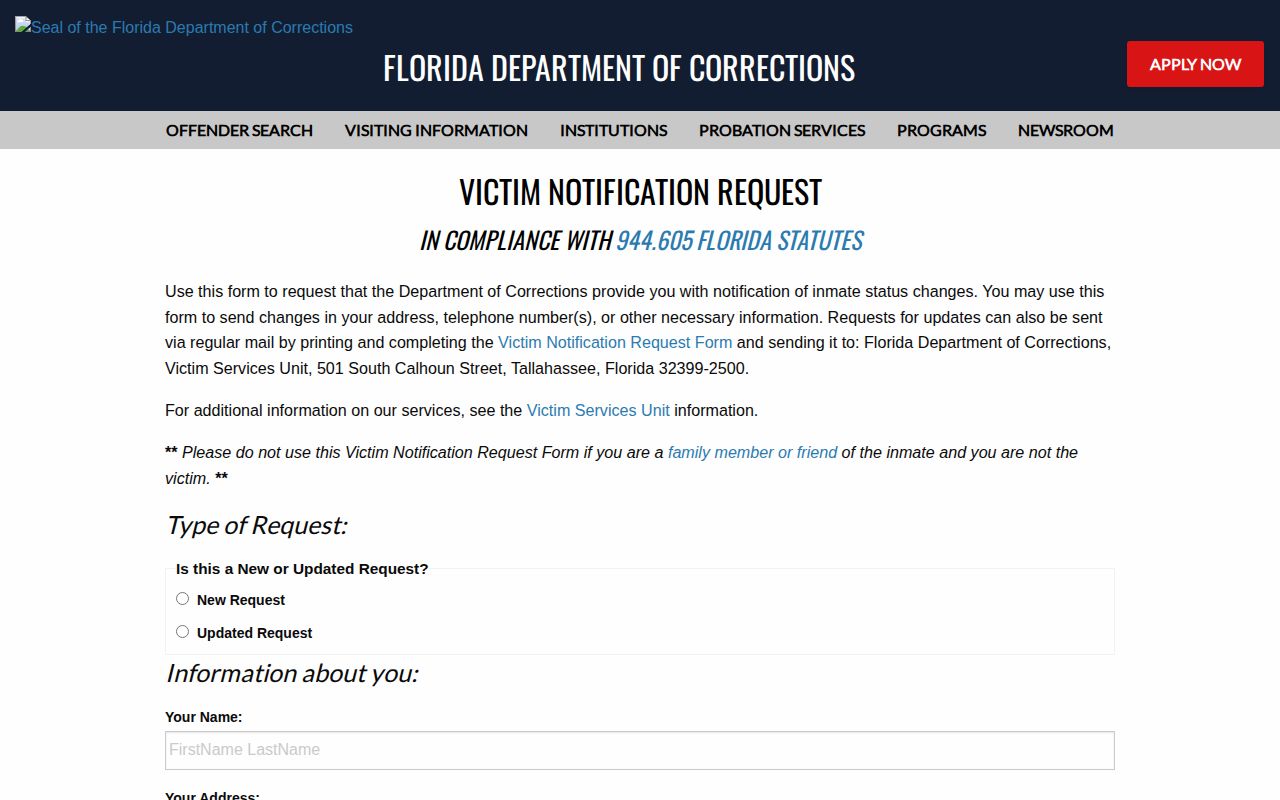
The official Florida screen shows that the notification program is broader than release alone. A transfer can mean continued custody. Out-to-court can be temporary movement. An escape or death event carries a wholly different meaning. The event name, agency, and date must stay together when the alert is documented.
Phone notice is available around the clock through the listed VINE number, but an agency remains the right place to resolve conflicting facts. Save the alert details before calling. That gives UCSO or FDC a clear event, person, and time to check against the source record.
Union County VINES Participation
Union County’s notification coverage is more than a general assumption about Florida. UCSO expressly says the county jail participates in the V.I.N.E.S. network for automatic notice when an offender is released. That local statement supports using VINELink first for a prompt named-person event while retaining an exact fallback to the jail and Records Unit.
For an urgent Union County Jail question, call 386-496-2501. For lasting proof, request the booking and release record from UCSO Records at 55 West Main Street, Room 102, Lake Butler, FL 32054. The office is open weekdays from 8:00 a.m. to 5:00 p.m., excluding holidays. Ask for the recorded release date and time, release type or authority, and destination or receiving agency if a transfer occurred.
Direct registration in VINELink is not automatically the same as enrollment in FDC’s victim-notification database. A person using FDC Victim Services should follow that program’s registration process and maintain current contact information there.
The sheriff’s statement confirms participation, but it does not promise that every event posts at once or stays visible for a fixed period. Keep the VINE registration active, and use the agency phone route if a notice is expected but has not arrived. When the question concerns a court-ordered release, check the Union County case as well. The order explains authority; the jail record confirms processing.
Confirm Union County VINELink Releases
VINE feeds can lag, names can collide, and status labels can change. An alert is strong timely evidence that the contributing agency reported an event, but it is not a certified release record. When exact timing or the nature of the exit matters, confirm the event with the office that controlled the custody. The source record should show whether the person returned to the community or went to another authority.
FDC’s released-inmate search covers people released from state prison, not people whose only custody was Union County Jail. A local jail release to FDC is a transfer. For a state record, search FDC by name or DC number and compare custody, release, and supervision entries. For a county event, use VINE, call UCSO, and request the sheriff record.
BOP and ICE require their own locators. A BOP result of “Released” or “Not in BOP Custody” ends only the federal Bureau of Prisons question. ICE custody or another hold may remain. VINELink should not be used to infer the status of a person outside its contributing systems.
Juvenile information also requires care. Florida sources describe juvenile justice participation at a statewide level, but youth records can carry confidentiality limits. A public adult search should not be treated as a substitute. Route an authorized inquiry through DJJ, the juvenile court, counsel, or a permitted family process, and do not infer release from the absence of a public result.
Union County Alert Evidence
Keep the alert’s event name, reporting agency, date, and person identifier together. A screenshot or saved message can preserve what the system displayed at that moment, but the source may later update. If the event is disputed or the time is important, ask UCSO or FDC for the underlying nonexempt record rather than relying on a remembered call.
The court file answers a different question. It may show a bond order, dismissal, sentence, jail credit, probation order, or termination entry. It does not replace the jail’s physical release time. Taken together, the VINE event, agency release record, and court disposition explain when custody changed, what the agency recorded, and what legal action led to the change.
Note: A release alert confirms a reported custody event, not the outcome of every charge in the related court case.